Forecourt Decommissioning
Underground Fuel Tank Cleaning Services
Forecourt decommissioning involves making a filling station site safe, removing redundant infrastructure and preparing the area for its next use.
At J W Hinchliffe Tanks, we provide forecourt decommissioning services across the UK using our in-house team. Projects can include tank cleaning and gas-free preparation, removal of pumps, canopies, kiosks and associated equipment, waste handling and support with remediation where required.
Whether the site is a smaller forecourt or a larger filling station with multiple tanks and structures, the work should be planned carefully so it can be completed safely, efficiently and with minimal disruption.
Need a quote for forecourt decommissioning? We can advise on the most suitable next steps for your site.
Forecourt Decommissioning at a Glance
- Forecourt decommissioning across the UK
- In-house team for tank cleaning, removal and site clearance
- Removal of pumps, canopies, kiosks and associated infrastructure
- Cleaning and gas-free preparation of underground fuel tanks
- Waste handling through licensed routes
- Site investigations, validation sampling and reporting where required
- Support with permits, approvals and remediation planning
- Suitable for both small and large forecourt sites
Why Choose J W Hinchliffe for Forecourt Decommissioning?
Businesses choose J W Hinchliffe Tanks because we provide a practical, safety-led decommissioning service tailored to the site and the level of infrastructure involved.
In-house team with nationwide coverage
Licensed waste transfer capability
WAMITAB-qualified waste handling support
IOSH, NEBOSH and confined space expertise
Support with permits, approvals and compliance
Remediation, validation fuel sampling and reporting where required
Customer Testimonials
See what customers say about working with J W Hinchliffe Tanks. Read our Google reviews for recent feedback on our commercial tank services.
Our Forecourt Decommissioning Process
Although every project is different, forecourt decommissioning usually follows a clear process.
Initial Enquiry and Site Details
First, we review the site location and any available information about the tanks, pumps and surrounding infrastructure. This helps us understand the likely scope of the project.
Budget Quotation
Next, we prepare a budget quotation to give an initial guide to feasibility, likely costs and the expected scope of the work. The live page already describes this as a baseline quotation stage.
Site Visit and Formal Proposal
Where needed, one of the team can visit the site to review the forecourt in more detail. After that, the budget price can be developed into a formal proposal tailored to the project.
Tank Cleaning and Gas-Free Preparation
Before intrusive work begins, tanks are cleaned and degassed so the site can be made safe for the next stage.
Removal of Forecourt Infrastructure
Pumps, canopies, kiosks, car washes and other obstructions can then be removed to create the space needed for excavation and clearance.
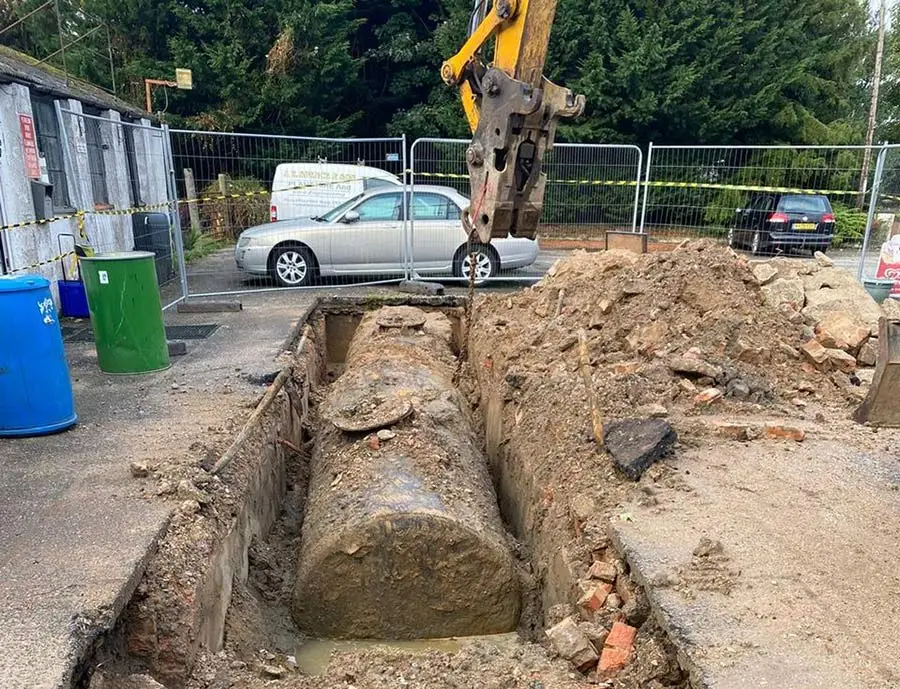
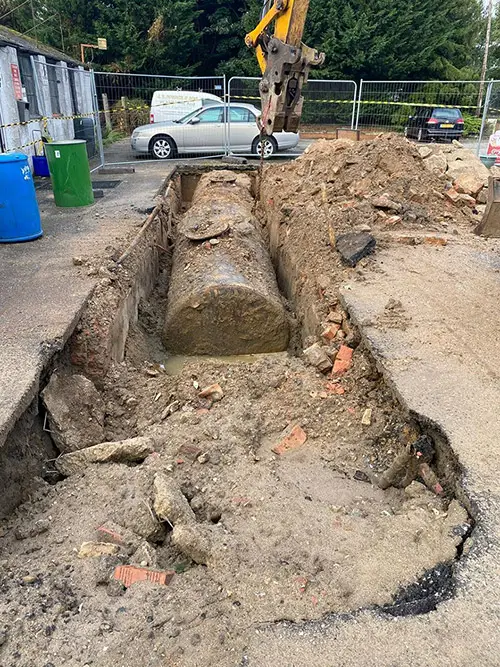
Tank Excavation and Removal
Once the site has been prepared safely, underground tanks can be excavated and removed. Soil samples may also be taken as part of the wider decommissioning and redevelopment process.
Waste Handling and Remediation Support
Waste materials are handled through the appropriate routes, and where required, support can be provided for Phase 1 and 2 investigations, validation sampling and reporting.
Handover and Next Steps
Once the site has been made safe and the agreed works are complete, the next steps for remediation, redevelopment or further investigation can be discussed.
Waste Management and Environmental Responsibility
Forecourt decommissioning projects must be planned around environmental risk, responsible waste handling and the safe removal of fuel-related infrastructure.
J W Hinchliffe Tanks operates a licensed waste transfer station and uses qualified personnel to manage waste responsibly. In addition, environmental controls, remediation support and validation sampling can be incorporated where the project requires them.
Where flammable liquids are involved, site-specific controls should also reflect relevant HSE DSEAR guidance.
What We Need to Quote
To quote for forecourt decommissioning, we usually only need a few key details.
In many cases, photos and basic site information are enough for an initial assessment.
- Site location
- Any known details about the tanks on site
- Information about pumps, canopies, kiosks or other infrastructure
- Photos of the forecourt and access points
- Any known fuel remaining on site
- Whether remediation or redevelopment is likely to follow
- Any timing or access constraints
Forecourt Decommissioning FAQs
Most forecourt decommissioning projects can be completed within around two weeks, and many are finished sooner. However, remediation works for planning or redevelopment can extend the overall programme.
Forecourt decommissioning usually involves making the site safe, cleaning and degassing tanks, clearing infrastructure and removing underground tanks. After that, soil sampling and preparation for redevelopment may also be needed.
If you do not have site records, the local petroleum licensing authority is often the best place to start. Sites storing petrol should have licensing records, and JWH can help point you towards the right authority.
Yes, forecourt decommissioning can be carried out on both smaller and larger sites. The approach is tailored to the number of tanks, the level of infrastructure and the site constraints.
Any remaining fuel is handled as part of the tank cleaning and degassing process. This is done under controlled procedures so the risk of fire or explosion is reduced before removal works begin.
Yes, some forecourt decommissioning projects require permits or approvals. Support can be provided to help obtain the necessary documentation and keep the project compliant.
Yes, remediation support can be provided where it is needed. This may include investigations, validation sampling and reporting to support redevelopment or planning requirements.
Yes, environmental responsibility is a key part of forecourt decommissioning. Responsible waste handling, compliant disposal routes and site-specific environmental controls should all form part of the project.
Compliance note
These FAQs provide general UK guidance. However, exact requirements can vary depending on the site layout, fuel stored, local authority requirements and any remediation needs. Project-specific advice should always be confirmed before work begins.

Nationwide Commercial Tank Services
From Scotland to Cornwall, JWH Tanks delivers top-tier commercial tank services throughout all areas of the UK. Our commitment to nationwide coverage ensures that businesses everywhere can access our expertise. Our coverage includes:
Nationwide Commercial Tank Services
J W Hinchliffe Tanks provides commercial tank services across the UK, including forecourt decommissioning, tank cleaning, tank removal and related support services.
If you need advice on forecourt decommissioning or the most suitable next steps for your site, contact the team with the site details and location.
OUR ACCREDITATIONS